
Introduction
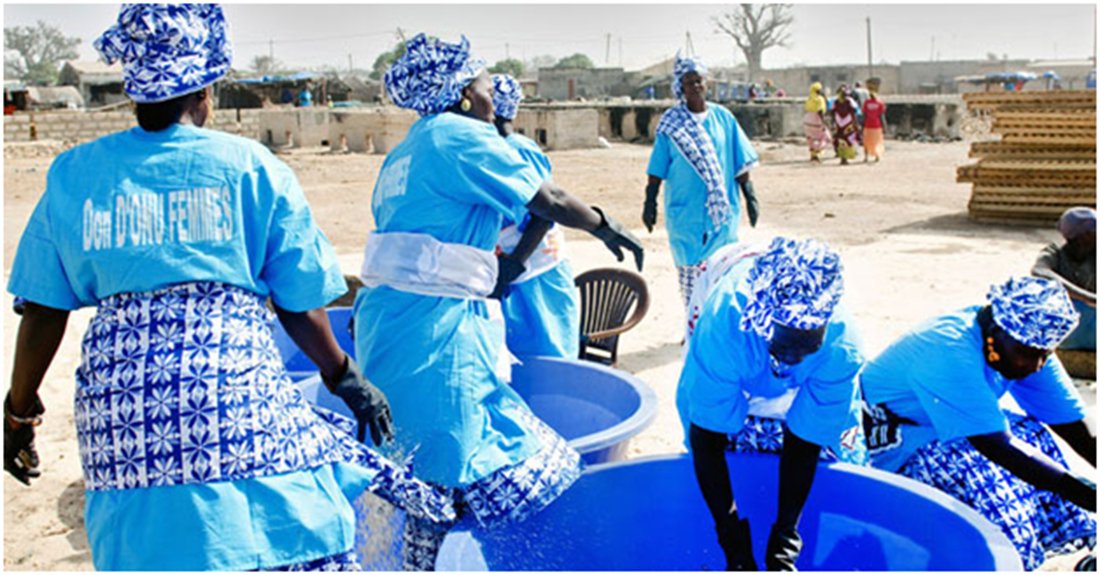
In July 2010, the United Nations General Assembly created UN Women, the United Nations Entity for Gender Equality and the Empowerment of Women. In doing so, UN Member States took an historic step in accelerating the Organization's goals on gender equality and the empowerment of women. The creation of UN Women came about as part of the UN reform agenda, bringing together resources and mandates for greater impact. It merges and builds on the important work of four previously distinct parts of the UN system, which focused exclusively on gender equality and women's empowerment:
• Division for the Advancement of Women (DAW)
• International Research and Training Institute for the Advancement of Women (INSTRAW)
• Office of the Special Adviser on Gender Issues and Advancement of Women (OSAGI)
• United Nations Development Fund for Women (UNIFEM)
Governance
According to UN General Assembly resolution 64/289, which established UN Women, the organization is governed by a multi-tiered intergovernmental governance structure as follows:
(a) the General Assembly, the Economic and Social Council and the Commission on the Status of Women shall constitute the multi-tiered intergovernmental governance structure for the normative support functions and shall provide normative policy guidance to the Entity;
(b) the General Assembly, the Economic and Social Council and the Executive Board of the Entity shall constitute the multi-tiered intergovernmental governance structure for the operational activities and shall provide operational policy guidance to the Entity.
UN Women Governing Documents
UN General Assembly resolution 64/289 on system-wide coherence (A/RES/64/289). Paragraphs 49-90 relate to the establishment of UN Women.
UN General Assembly resolution 63/311 on system-wide coherence (A/RES/63/311)
Comprehensive proposal for the composite entity for gender equality and the empowerment of women: Report of the Secretary-General (A/64/588)
Objectives
The main roles of UN Women are:
• To support inter-governmental bodies, such as the Commission on the Status of Women, in their formulation of policies, global standards and norms.
• To help Member States to implement these standards, standing ready to provide suitable technical and financial support to those countries that request it, and to forge effective partnerships with civil society.
• To lead and coordinate the UN system's work on gender equality as well as promote accountability, including through regular monitoring of system-wide progress.
Guiding Documents
Several international agreements guide the work of UN Women:
Convention on the Elimination of All Forms of Discrimination against Women (CEDAW) and the optional protocol. The "women's bill of rights” is a cornerstone of all UN Women programmes. More than 185 countries are parties to the Convention.
Beijing Declaration and Platform for Action (PFA). Adopted by governments at the 1995 Fourth World Conference on Women, this document sets forth governments' commitments to enhance women's rights. Member states reaffirmed and strengthened the platform in 2000 during the global five-year review of progress, and pledged to accelerate its implementation during the 10-year review in 2005, the 15-year review in 2010, and the 20-year review in 2015.
UN Security Council resolution 1325 on women, peace and security (2000) recognized that war impacts women differently, and reaffirmed the need to increase women's role in decision-making with regard to conflict prevention and resolution. The UN Security Council subsequently adopted seven additional resolutions on women, peace and security: 1820 (2008), 1888 (2009), 1889 (2009), 1960 (2010), 2106 (2013), 2122 (2013) and 2242 (2015). Taken together, the eight resolutions represent a critical framework for improving the situation of women in conflict-affected countries.
In September 2015, governments united behind an ambitious agenda that features 17 new Sustainable Development Goals (SDGs) and 169 targets that aim to end poverty, combat inequalities and promote prosperity while protecting the environment by 2030. They were preceded by the Millennium Development Goals (MDGs) from 2000 to 2015.
UN Women's strategic plan, 2014-2017 presents the organization's vision, goals and plan of action in a number of critical areas to support gender equality and women's empowerment worldwide. These areas include: leadership and political participation. economic empowerment, ending violence against women and girls, peace and security, governance and national planning, intergovernmental support, and UN system coordination.
The last date of submission of forms is 20th July 2018
Copyright © 2013-2026 Presidium. All Rights Reserved.
